
Most sellers think of their house as one number: what it is worth. A closing table thinks of a different number: what is stacked against it.
A lien is a recorded legal claim against your property. It does not stop you from owning your house, or from agreeing to sell it. What it does is stand in line. When the house sells, the claims in that line have to be paid, released, or otherwise dealt with before the buyer receives clear title. One lien is a bill. Several, stacked together, can quietly eat the entire equity.
The liens you know about, and the ones you do not
Every seller knows about the first mortgage. Most know about a home equity loan or line of credit. The rest of a stack is often a surprise:
A deferred government second. Help from an FHA or similar program often arrives as a second lien with no monthly payment and no interest, due when the first mortgage ends. Nothing is ever billed, so sellers forget them; our guide to being behind on mortgage payments with almost no equity explains how those partial claims work.
A judgment. Lose a lawsuit, or never answer one, and in most states the judgment can be recorded as a lien against real estate you own in the county, even debts that began as credit cards or medical bills.
Property taxes. Unpaid taxes are a lien in their own right, and a senior one. Our property tax foreclosure article covers how far that can go in Florida.
HOA dues. An association can record a lien for unpaid assessments, and the balance grows with fees. Our HOA foreclosure guide covers the Florida process.
A mechanic’s lien. An unpaid contractor, subcontractor, or supplier can record a claim for work done on the house.
Code, utility, and support claims. Cities record liens for unpaid code fines, sometimes accruing until the violation is fixed. Some water and sewer utilities can lien for unpaid bills. In many states, unpaid child support can become a lien on real property, and a federal tax lien attaches to everything a taxpayer owns, not just the house being sold.
The mortgage you already paid off. A loan paid years ago whose release was never recorded still shows up as an open claim until the paperwork is fixed. Paid is not the same as cleared.
How the stack gets found: the title search
Nobody has to guess at any of this. When a sale starts, a title company or attorney searches the public records: deeds, mortgages, judgments, tax records. The result is a document called a title commitment. It lists what the search found and what must be paid, cleared, or released before the company will insure the buyer’s title.
Read as a seller, the commitment is the first time the whole stack sits on one page: each lien, who holds it, and the payoff figure the title company requests from each holder, good through a stated date. Surprises live here. A balance that kept growing after you stopped looking. A lien you genuinely paid, with no release ever recorded. A figure that does not match your records.
This is why title work should be ordered early. A stack discovered in week one is a problem with time to solve. The same stack discovered days before closing is usually a dead contract.
Priority: the order matters more than the size
When money runs short, liens are not paid in the order the bills arrived, or largest first. They are paid by priority. Property taxes sit at or near the top in nearly every state, ahead of mortgages recorded before them. After taxes, the general rule is first in time, first in right: claims are paid in the order they were recorded. One exception matters: in many states a mechanic’s lien can reach back to when the work began, not the day it was recorded. Position in line decides who gets paid; the back of the line gets what is left.
Here is a worked example. Every figure in it is illustrative, invented for the example, and approximate. Say a house is worth approximately $260,000, against this stack: property taxes owed, approximately $4,800. First mortgage payoff, approximately $212,000. A deferred government second, approximately $24,500. A judgment, approximately $13,900. A utility lien, approximately $1,150. The claims total approximately $256,350. A conventional sale at the full $260,000, minus roughly 8 to 10 percent in commissions and closing costs, leaves approximately $234,000 to $239,000 to pay a $256,350 stack. The deal is short by roughly $17,000 to $22,000, and a discounted cash offer has even less room. The house was never the problem. The line was.
Some debts follow the house. Some follow you
Liens come in two kinds, and the difference decides what a sale can and cannot end.
Debts tied to the property itself, the mortgage, the tax bill on that parcel, the HOA lien, the mechanic’s lien, attach to that house. Settle them at a closing and they are finished with that property.
Debts tied to you personally behave differently. A judgment lien is a claim against the person, recorded against their real estate: it can reach every property that person owns in the county, not just the one being sold, and in some places property acquired later as well. A federal tax lien works the same way. Selling one house does not end these debts; it settles what that closing required, and the rest follows you to the next property.
Which kind each of your debts is, is a question for a real estate attorney in your state, and one of the most important in a stacked sale.
Quiet liens still count
The liens that cause the most trouble are often the silent ones. A deferred second that has asked for nothing in years still appears in the title work, and the title company will require it paid or released before insuring the sale. A debt settled with a handshake and no recorded release is still an open claim on the record.
Clearing these is paperwork, and paperwork takes time and sometimes money: requesting payoffs, tracking down releases, recording documents. When the original lender or servicer no longer exists, someone has to trace who succeeded them before a release can be issued at all.
The Haines City house: three liens on one ordinary home
In Haines City, Florida, a mother and daughter co-owned a home at 205 Golf Aire Blvd. They wanted a newer property nearby for the elderly mother, and their house needed steady maintenance rather than any major renovation. The house was not the obstacle. The stack was: an existing first mortgage, a HUD related second mortgage lien, and a water treatment lien. Together, they left no room for a conventional discounted cash purchase that met the sellers’ goals.
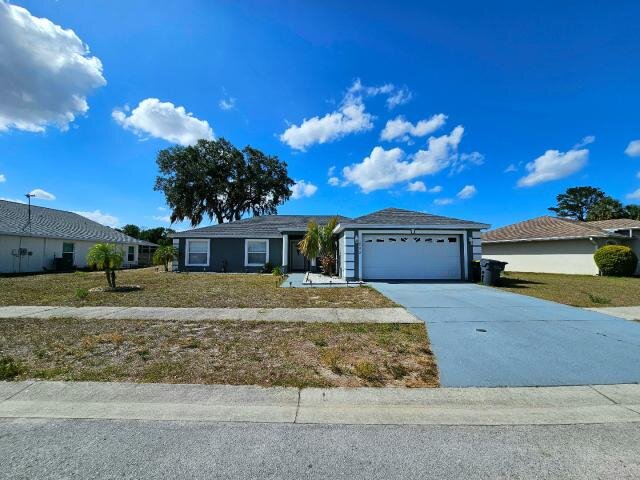
The sale closed on July 23, 2025, structured through the existing financing on a short term basis, with the agreed cash to the sellers at closing. Our Haines City case study carries the transaction in full, and our subject to guide explains that structure and its limits. One limit matters here: a transfer like this should not be read as a release of the original borrower, or as proof that transferring title resolved every obligation. The stack did not vanish. The sale was built to account for it.
A second Florida purchase, in Palm Bay, carried the same shape: an FHA loan with a deferred balance left over from earlier loss mitigation, plus a judgment of approximately $14,000, with the sellers approximately five to six months behind and total obligations approaching the home’s retail value. It also closed through the existing financing, in March 2023, with relocation cash to the sellers; our Palm Bay case study carries its own cautions, including that the structure did not by itself cure the delinquency. Two ordinary houses, two stacks. In both cases the work was reading the stack correctly before choosing a structure.

When the stack is bigger than the equity
If the line adds up to more than a sale can pay, three honest paths exist. None of them is magic, and none is guaranteed.
Negotiate the payoffs. A lienholder can agree in writing to accept less than the full balance to release its lien at closing. Junior lienholders and judgment holders are the ones usually approached, because their position in line is the weakest. Some say yes, some say no, and some never answer at all. Any agreement has to be in writing before closing.
Ask for a partial release. A lienholder can release one property from its lien while the debt itself survives against the borrower personally. That is different from forgiveness. It is not common, but it can be the difference between a sale that closes and one that cannot.
Structure the sale so the numbers work. When a payoff sale cannot cover the stack, a purchase through the existing financing sometimes can, because the first mortgage stays in place instead of being paid off at closing. Both case studies above used that structure. It carries real continuing obligations for the seller, which our low equity guide and our subject to guide lay out honestly, and it only works when the numbers, liens included, work.
And sometimes the stack wins for now. If the claims exceed any structure a buyer can responsibly offer, the honest answer is an attorney, time, and the senior claims first. Anyone who promises to make liens disappear is promising something no buyer controls.
What to do if this is your house
First, get the title work done early, as soon as you are serious about selling, and get every payoff in writing, with its good through date. The commitment is the map; every later decision uses it, and balances on old liens are not always what the last letter said.
Second, do not start paying lienholders out of pocket before you can see the whole stack. Money spent clearing a junior lien does nothing to move a senior one, and where money is short, order matters as much as amounts.
Third, if judgments, tax liens, or support liens are in your stack, talk to a real estate attorney in your state early. Those debts can follow you past this sale.
Quick answers
Can you sell a house with multiple liens on it? Yes. Liens do not block a sale; they have to be paid, released, negotiated, or structured around, and in most sales the payoffs happen at closing, out of the proceeds, in priority order. What decides whether a sale works is whether the stack, the price, and the structure fit.
If there is not enough money, who gets paid? Claims are paid by priority: property taxes near the top, then generally in the order liens were recorded. A junior lienholder may receive part of its balance, or nothing. That is exactly why junior holders sometimes negotiate.
Can a lienholder agree to take less, or to release the house but keep the debt? Both happen. A negotiated payoff reduces the balance for a release at closing; a partial release frees the property while the debt survives against the borrower. Neither is guaranteed, and both have to be in writing before closing.
I paid a debt years ago. Why does the lien still show up? Because paying and clearing the record are two different steps. Until a release or satisfaction is recorded, a new title search still sees an open claim, and someone has to produce the paperwork.
The bottom line
A lien stack is not a verdict on a house. It is a list, with an order, and lists can be read, priced, and worked through. The sellers who come out best are the ones who saw the whole list early, in writing, and chose a structure that matched it. The expensive version of this story is always the same: a stack discovered at the last minute, by surprise.
This article is general information about how liens and closings work, not legal advice. Lien priority, deadlines, and release rules vary by state and by the documents involved, and debts tied to you personally can follow you beyond a sale, so speak with a real estate attorney in your state about your specific situation.
Questions about your own situation? Call us at (407) 214-0772. We are happy to talk through your options, with no pressure and no obligation.