
Most Florida homeowners think foreclosure is something a bank does. It is not the only way to lose a house. If you fall behind on homeowners association dues, the association can place a lien on your home and foreclose on that lien through the courts, even if you are current on your mortgage, and even if you do not have a mortgage at all.
We review seller situations across Florida, and HOA pressure shows up more often than most people expect. It is not a rare corner of the system either. In Pinellas County alone, associations filed 33 foreclosure cases in September 2026, about one in five of all foreclosure filings in the county that month, and nearly all of them sat in county civil court, where the amounts in dispute run under $50,000. In the circuit court, where the mortgage foreclosures live, only 1 of 113 cases that month was filed by an association. The foreclosure world splits in two: the big court is mostly banks and mortgages, and the small court is mostly associations and dues.
(Filing count from Pinellas County Clerk public court records for September 2026, with association plaintiffs identified by name. Treat it as a careful minimum rather than an exact total.)
This guide explains how an HOA foreclosure works in Florida, why the balance grows so quickly, and what you can do if letters from the association or its attorney have started to arrive.
How a missed dues payment becomes a foreclosure
Florida law gives an association a set sequence it must follow, and every step comes with a letter.
First comes the late notice. If your assessments fall behind, the association sends a written notice of late assessment stating what you owe. It must give you 30 days to pay before it can start adding its attorney fees to your balance.
Next comes a notice of intent to record a claim of lien. Before the association can record a lien against your home, it must send this formal notice and give you 45 days to pay everything owed.
If the balance is still unpaid, the association records a claim of lien in the county records. From this point the debt is attached to the house itself, not just to you.
Before it can sue, the association must send one more letter, a notice of intent to foreclose, and wait another 45 days.
Only then can it file a foreclosure lawsuit in circuit court, much like a mortgage foreclosure, asking the court to order a sale of the home to pay the lien.
Those two 45 day windows are not fine print. They are your real chances to cure the balance, negotiate, or make a plan while the cost of doing so is still relatively low. Condominium associations follow a similar sequence under a different chapter of Florida law, with the same basic shape. If you want the mortgage side of the picture, our guide to the Florida mortgage foreclosure process explains how that separate track works.
Add the required waiting periods together and roughly three months of formal warnings stand between the first demand letter and the earliest day a lawsuit can be filed. There is no minimum balance required to start any of this. A few hundred dollars of unpaid dues, left alone long enough, is enough. And past 90 days delinquent, the association can also suspend your use of the common areas and your voting rights until the account is settled.
Why a small balance gets big so fast
The amount on an HOA lien is rarely just the dues you missed. Florida law allows the lien to include the unpaid assessments, interest, late charges, and the association’s reasonable costs and attorney fees for collecting. Once the association’s attorney or collection firm is involved, the fees can grow larger than the dues themselves.
Special assessments deserve a mention of their own. When an association levies one large charge, for a roof, a structural repair, or building up reserves, that amount is an assessment like any other. Miss it, and it follows the same road into a lien.
The arithmetic surprises people. In one Florida townhouse community in our files, dues run about $355 a month. One year of missed dues is about $4,260, before a single late fee, interest charge, or attorney bill is added.
Real files show where that leads. In one Palm Beach County case we reviewed, three separate HOA liens stacked on a single condo unit added up to about $10,382. In a Baker County file, a single recorded HOA lien on a single family home came to about $1,930 and sat recorded for over a year. Figures from individual files are approximate and every case is different, but the pattern is consistent: the longer a balance sits, the more of it is fees rather than dues.
No mortgage does not mean no foreclosure risk
This is the part that catches homeowners off guard. The association’s right to a lien comes from the community’s recorded declaration, the document that was already in place when you bought the home. Florida courts have long treated that lien as attached to the property from the start, which means Florida’s strong homestead protection does not block an association from foreclosing on it. A general creditor with a much larger judgment may not be able to touch your house. Your HOA can.
Owning your home free and clear removes the bank from the picture. It does not remove the association. It can actually make the situation more dangerous, because there is no lender involved to slow anything down, and a lien that is small compared with the home’s value can still force a sale of the whole property.
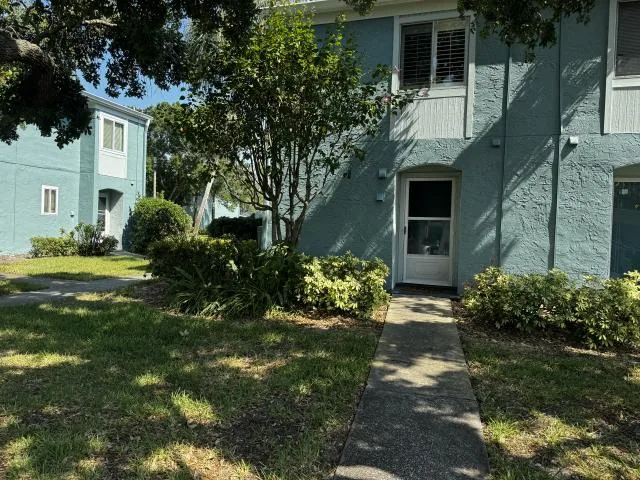
That is not theory. A St. Petersburg homeowner we worked with had fallen almost a year behind on HOA dues after losing a job. There was no mortgage, and the home had substantial equity. The pressure came entirely from the HOA and its attorney. She sold the home to us on a timeline that worked for her, closed in July 2024, and was able to stay in the home for a short period after closing as part of the arrangement. You can read the full story in our St. Petersburg HOA pressure case study.
If you also have a mortgage, the two debts run on separate tracks
An HOA foreclosure has nothing to do with your mortgage, and your mortgage has nothing to do with your HOA. You can be fully current with your lender and still face an association foreclosure. A low interest rate does not protect you either. In the Palm Beach County file above, the homeowner’s mortgage rate was 2.7 percent, the kind of loan people assume keeps them safe. It offered no protection on the HOA track, and the association moved ahead on its own.
One more surprise, in both directions: an HOA foreclosure sale does not wipe out a first mortgage. Whoever takes the property at that sale takes it subject to the mortgage. And nothing about an association case pauses your mortgage obligations. If both debts are behind, both problems have to be solved. Our Florida foreclosure options page walks through what selling looks like in situations like these.
What you can do if you are behind on HOA dues
Open the letters, and act on the first one. The early notices are the cheapest time to fix this. Every stage after them adds fees.
Ask for a full written breakdown. You are entitled to know exactly what the association says you owe: dues, interest, late charges, and fees, line by line.
Ask about a payment plan. Many associations would rather collect over time than pay attorneys to foreclose. Get any agreement in writing.
Talk to a Florida attorney early. There are legal tools most homeowners never hear about, including a formal way to contest a lien that forces the association to act within a deadline or lose the lien. An attorney can tell you whether any of them fit your situation.
Even if a lawsuit has already been filed, it is not necessarily over. Paying the full amount owed can still stop the foreclosure before the court enters judgment, and Florida law preserves a right to redeem the property even later, up until the sale is finalized. Every version of this gets more expensive the longer you wait, which is why the early letters matter so much.
If the balance has grown past what you can repay, look at selling before there is a sale date. A sale on your own timeline usually protects far more of your equity than a court ordered auction, and it can happen even while an association case is pending, as long as the lien is resolved at closing.
Do not assume time will fix it. In the Palm Beach County case mentioned above, the association foreclosure was filed in February 2026 and still had no sale date eight months later. Court timelines are unpredictable in both directions. Slow is not the same as stopped.
Quick answers
Can an HOA foreclose on your home in Florida? Yes. If assessments stay unpaid, the association can record a lien against the home and foreclose on that lien through the courts.
Can an HOA foreclose if you have no mortgage? Yes, and in some ways the risk is worse. There is no lender in the picture, and a lien that is small next to the home’s value can still force a sale of the whole property.
How long does an HOA foreclosure take in Florida? The law requires roughly three months of notice periods before a lawsuit can even be filed. After that, court timelines vary widely. One Florida case we tracked still had no sale date eight months after filing.
Can you sell a house with an HOA lien on it? Yes. The lien is resolved from the sale proceeds at closing, which is what happened in the St. Petersburg case above. Selling before a court ordered sale date usually protects far more of your equity.
The bottom line
An HOA foreclosure in Florida starts quietly, with dues, and grows through fees until the association holds a lien it can enforce against the house itself, mortgage or no mortgage, homestead or not. The homeowners who come out of it best are almost always the ones who acted during those first notice windows, while the balance was still mostly dues.
This article is general information about how the process works in Florida, not legal advice. Deadlines in your case depend on your association’s documents and the notices you received, so speak with a Florida attorney about your specific situation.
Questions about your own situation? Call us at (407) 214-0772. We are happy to talk through your options, with no pressure and no obligation.