
When a Florida homeowner dies, the family usually assumes the house now belongs to them. In one sense that is true: Florida law passes ownership to the heirs or the people named in the will at the moment of death. But the deed still sits in the name of someone who has died, and nobody has paper authority to sign a sale.
Probate is the court process that closes the gap: it turns who the family believes owns the house into who the record says owns it, and it names the person who can sign.
The house has owners the day someone dies. It just has no signer
If there is a will, it states the owner’s wishes, but a will does not appoint anyone by itself. A court has to admit the will to probate and appoint the personal representative it names. Being named is not the same as being appointed, and title companies ask for the court’s appointment papers, called letters of administration, before they treat anyone’s signature as valid for the estate.
If there is no will, Florida’s intestacy statutes decide who inherits, in a set order. A surviving spouse comes first, taking the whole estate when there are no descendants, and half in many blended family situations, with the descendants sharing the rest. With no spouse, the property descends to the owner’s children, then to parents, then to siblings and their children. Either way, the family’s understanding and the public record are two different things. Probate is how the record catches up.
Probate comes in two sizes, and the second door surprises people
The full process is formal administration: the court appoints a personal representative, issues letters of administration, notifies creditors, and supervises the settlement. An uncomplicated case commonly runs about 6 to 12 months, longer when heirs disagree. The appointed representative is the signer. If the will gives a power of sale, they can generally sell without asking the court again. If there is no will, or no usable power of sale, no title passes until the court authorizes or confirms the sale.
The shorter process is summary administration, and it has two doors in. The first is a value test: the estate subject to administration in Florida, not counting property exempt from creditors’ claims, is worth $150,000 or less. That figure was raised in 2026; many websites still print the old $75,000 limit. The second door is a time test: if the owner has been dead for more than two years, summary administration is available no matter what the estate is worth. No personal representative is appointed. The court’s order distributing the property to the heirs is the paper a title company needs.
The time door is the most useful fact in this article. Families with houses frozen for years usually qualify through it, because creditor claims are generally barred two years after the death, and most have never heard the door exists. A homestead generally does not count toward the value test, though a court order determining homestead status is often still needed before a title company will insure a sale by the heirs.
When probate was never opened, the house just sits there
Nothing forces a family to open probate, and many never do. A relative lives in the house or it sits empty, and the deed stays in the name of the person who died. The costs of owning the house keep arriving anyway, and property taxes are the dangerous ones: unpaid taxes can end in a tax deed sale, as our property tax foreclosure article explains.
We see the long version in real files. In the Pine Hills area of Orange County, one owner died in 2017 without a will. Nine years later, the county record still shows the house in the estate’s name and nothing had ever been filed; a summary administration packet sat complete but unsubmitted. The file’s estimate was about 45 days from filing to a court order, and that is all it is, one file’s estimate, not a court promise. But look at what the nine years meant. Paper could be signed, and a wholesaler was in fact marketing the house, yet nothing could close until a court order was recorded, so earnest money had to stay refundable until then. A title file sat open, waiting on a seller who did not yet legally exist. And the estate’s closing costs, a home equity payoff being pulled, a code lien of about $9,500, back taxes needing redemption, could not even be confirmed until the estate could act. All figures from that file are approximate.
Estates get solicited before they have any authority, and a signature collected before the court order is a promise to sell later, not a sale. Families in grief sign paperwork every year without anyone explaining that difference.
What title work can find: the Minneola house
Sometimes probate is opened and the tangle is still waiting inside the title work. A granddaughter who had cared for her grandmother inherited the home at 205 E Chester St in Minneola. Reaching a price agreement turned out to be the easy part. The title work identified another rightful owner, an additional ownership issue on top of the inheritance itself. Probate elements and liens were involved, and multiple family members or signers had to participate before the sale could close.
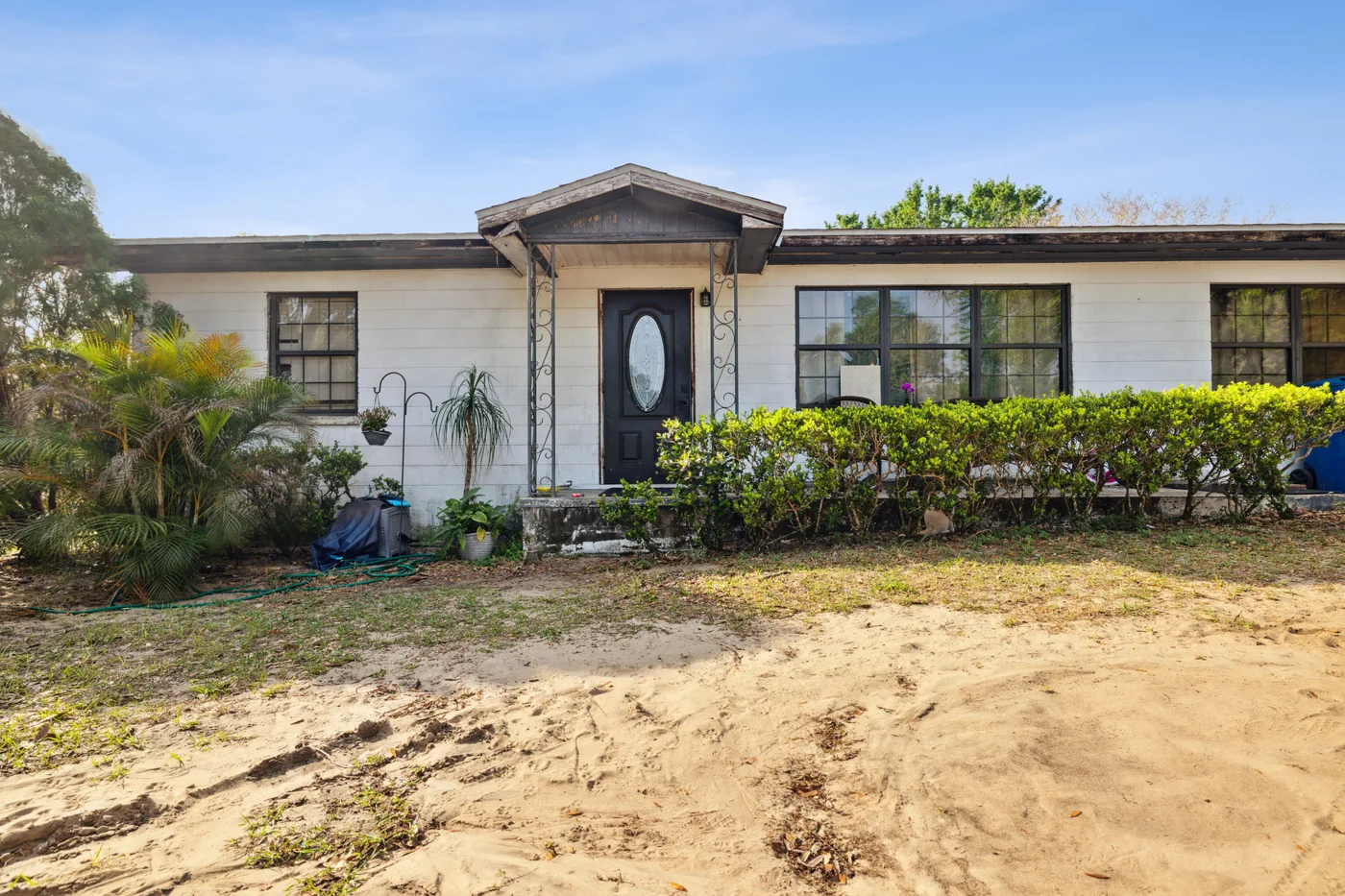
The house had an older roof and dated finishes, but those were the lesser problems. The transaction closed on April 28, 2023, once the ownership questions were worked through; our Minneola case study has the full story. The lesson: on an inherited house, run title work early. A surprise owner is cheaper to find in week one than in week ten.
Too many owners is its own problem
When several heirs each own a share, a voluntary sale needs all of them. One sibling cannot sell the whole house, and a buyer who takes a deed from only some of the owners has bought a lawsuit, not a property. When heirs cannot agree, the legal fallback is a partition action, a court case that can force a sale. It is slow and expensive for everyone, and usually the worst financial outcome on the table.
Our Leesburg case study is the same shape: two brothers inherited a house, disagreed over it, and had a tree down on the sunroom and substantial repairs waiting on top of the disagreement.
If the owner lived in another state
Florida real estate answers to Florida courts. If the owner lived and died in another state, a probate completed there does not by itself transfer a Florida house. Florida requires its own ancillary administration for the Florida property, with ancillary letters issued to the person the will designates for Florida, or to the home state representative if they qualify to act here. Snowbird families discover this late and budget for one probate while needing two.
What can move before probate finishes, and what cannot
Quite a lot can move. A family can identify who the decision maker is, the step everything else waits on and the one our files stall on most often. They can gather the death certificate, the will, and the deed, open the probate case, order title work, and talk with buyers. Once a personal representative is appointed in a formal administration, a sale can often be agreed and signed, with the court confirming it where required.
Our Somerset Court case study in Sanford shows the property side moving while estate matters were handled: the seller had inherited the home from his father, his own window work had left county permits open, and the purchase closed as is in June 2024 with the permit issues addressed as part of the sale. Here is the seller telling it in his own words:


What cannot move is the closing itself, ahead of authority. No title company will insure, and no lender will fund, a sale where the signer has not been established by a court. Probate cannot be skipped when the law requires it, and a buyer who says it does not matter is making the closing someone else’s problem. It will be the family’s.
What to do if this is your house
First, find out who the decision maker is supposed to be: the heirs under the statute, a personal representative named in a will, or a trustee if the house was put in a trust. Everything else queues behind that answer.
Second, have a Florida probate attorney tell you which door fits, summary or formal, before you sign anything with anyone. If the owner died more than two years ago, ask specifically about the time test.
Third, order the title work early, before you pick a price or a closing date. The Minneola surprise owner is the rule on old estates, not the exception.
Fourth, keep paying the property taxes and insurance if you possibly can; a tax problem stacked on a probate problem is how equity quietly disappears.
When the authority is sorted, our page on selling an inherited house in Florida walks through the selling side. The probate work comes first; the sale is the part after it.
Quick answers
Can you sell an inherited house in Florida before probate is finished? Often yes, once a personal representative is appointed and signs, with court confirmation where required. In summary administration, the heirs sign after the court’s order distributes the property. You generally cannot close before anyone has court established authority.
Can you sell a house if probate was never opened? Not with insurable title. The deed still shows a deceased owner, and no title company will insure a transfer until a probate order establishes who owns the house. If the owner died more than two years ago, summary administration is usually available regardless of the estate’s value.
Do all heirs have to agree to sell? For a voluntary sale, yes, every owner has to sign. If they cannot agree, a co-owner can ask a court for partition, which can force a sale but is slow and costly.
What if the owner lived in another state? Florida property needs a Florida ancillary probate, even if probate was completed in the owner’s home state.
How long does Florida probate take? Summary administration commonly resolves in weeks to a few months. Formal administration commonly runs about 6 to 12 months in uncomplicated cases. Both are approximate and vary with the county, the court, and whether the heirs agree.
The bottom line
An inherited Florida house is rarely stuck because of the house. It is stuck because ownership exists in the family but not yet on paper, and paper is all a closing runs on. Probate, especially the summary kind most old estates qualify for through the two year door, turns “the house is ours” into a signature a title company will accept. The families who handle it best identify the decision maker and open the right case early.
This article is general information about how the process works in Florida, not legal advice. Probate deadlines and requirements in your case depend on the will, the deed, and your county’s court, so speak with a Florida probate attorney about your specific situation.
Questions about your own situation? Call us at (407) 214-0772. We are happy to talk through your options, with no pressure and no obligation.