
Selling a House With Tenants in Florida: The Lease Travels With the Sale
Yes, you can sell a Florida house with tenants living in it. Landlords usually ask expecting a legal obstacle. There is not one. The real questions are what the lease does to your buyer pool, your price, and your paperwork, because in Florida a sale does not cancel a lease. The people living in the house, and the agreement they signed, are part of what you are selling.
That cuts both ways. A paying tenant mid lease can be the reason an investor buys your house. A tenant who has stopped paying, or a lease nobody can produce, becomes a cost the buyer prices in. This guide covers the law, two real Miami sales with opposite outcomes, and the part most sellers miss: how an occupied house gets priced.
A sale does not end a lease in Florida
Florida’s landlord tenant law, chapter 83 of the Florida Statutes, has no provision that ends a tenancy because the property was sold. The buyer steps into your position as landlord, on the same terms: same rent, same end date, same obligations. The deposit statute, discussed below, is written on that assumption: it tells a selling owner how to hand the tenants’ money to the new owner, because the tenancy is expected to continue.
What that means in practice:
A fixed term lease runs to its end date. If your tenants have six months left, the buyer is buying six months of that tenancy along with the house, unless the tenants agree otherwise in writing or a legal ground for termination applies.
A tenancy with no fixed term, the month to month kind, can be ended by either side with written notice: under section 83.57 of the Florida Statutes, at least 30 days written notice before the end of a monthly period. A sale does not shorten that notice, whoever gives it.
No buyer can lawfully pretend the lease is not there. A buyer who promises to “handle” your tenants outside the lease and the statute is promising something the law does not give them.
The Miami landlord who sold with the tenants still inside
Our clearest case sits in Miami. After a difficult divorce, the seller had moved to Orlando and kept the Miami house as a rental. Managing it from a distance was consuming time and money. The tenants were paying rent, with approximately six months remaining on their lease, and the seller wanted to sell as is without requiring them to leave.
The house had a problem on top of the tenancy: a leaking roof. The tenants wanted it repaired, the seller had been advised to replace the roof rather than patch it again, and the estimate for that roof was around $30,000. Insurance concerns added pressure.
We bought the house as is, with the tenants remaining, on a target closing of approximately three weeks for that transaction. Title issues surfaced during closing and took extra documentation to work through. The tenants stayed after the purchase, as their lease entitled them to. The roof was replaced later, on the buyer’s side of the closing, and after the tenants moved out at the end of their tenancy, the house was renovated and resold. Our case study of 15432 Southwest 9th Way has the full account and the photos.

Nothing about that sale required the tenants to be gone or hurried. The lease set the terms, and the price reflected them.
What an occupied house is really priced on
Sellers tend to think a tenant in place is a single fact. Buyers price three separate things, and the differences explain most of the gap between a landlord’s hopes and what an occupied house actually brings.
Access is the hidden price term. A tenant in place usually means limited showings, sometimes none at all. Florida law says a tenant may not unreasonably withhold consent to showings (section 83.53), and a landlord may not abuse that access either. In real life, occupied houses get seen less and inspected later than empty ones. Buyers who cannot get in do not bid, and the pool shrinks to investors willing to price what they have not fully seen. That discount is not punishment; it is the market charging for uncertainty.
Documentation beats description. A lease, a rent roll, and a payment history make an occupied house sellable at a defensible price. They prove the income is real and the term is what the seller says it is. Undocumented income gets discounted to roughly zero, because a buyer cannot underwrite a story. Short term rentals make the point sharpest. In one Osceola County file on our desk, a vacation rental townhouse near the parks corridor with about 183 Airbnb reviews at 4.9 stars and an HOA of about $169 a month had sat listed for 107 days at $395,000, all figures approximate, after a 2022 purchase above today’s value. Even then, a buyer prices the revenue the platform records can prove, not the revenue a seller remembers. Keep the lease, the statements, and the payout records. They are worth money at the closing table.
The lease is an asset or a liability depending on the number. A paying tenant at a market rent, mid lease, is a reason to buy: income from day one, no vacancy, no leasing cost. That was the Miami shape above. A below market lease with a long term left, or a tenancy where the rent has stopped, prices as a cost, and the offer says so.
The paperwork that travels with the sale
The tenants’ money is not yours to keep or forget at closing. Under section 83.49(7) of the Florida Statutes, when title to a rental property transfers, all security deposits and advance rents held for the tenants transfer to the new owner, together with any earned interest, and with an accurate accounting showing the amount credited to each tenant. Once the funds and records are transferred and the new owner gives a written receipt, the seller is released from holding it. Skipping it does not make it go away: if the paperwork is silent, the statute presumes the new owner received a deposit of up to one month’s rent.
Beyond the deposit, the closing needs the rest of the file: the lease itself, the payment history, any notices already given, and the rent prorations as of the closing date. Gathering it before you talk to buyers is the cheapest value a landlord can add to a sale.
When the tenants are the problem
Not every tenancy is the Miami anchor’s. Sometimes the rent has stopped, and the seller is carrying a mortgage, insurance, and a leaking roof on a house producing nothing.
Florida’s path for nonpayment is specific. Under section 83.56, if a tenant fails to pay rent and the default continues for 3 days after written demand for payment or possession, not counting weekends and court holidays, the landlord may terminate the rental agreement. If the tenant still does not leave, possession is recovered through the county court where the house sits, under section 83.59. There is no self help version: possession changes hands through the court, the tenant’s surrender, or abandonment. From filing to a vacant house commonly runs weeks to months (approximate, and it varies by county and by whether the tenant contests the case).
That timeline is why eviction economics drive so many exits. An owner who cannot afford months of legal cost and lost rent, or cannot face it, often sells the problem rather than solving it. A buyer who purchases occupied takes the tenancy as it stands, arrears and process included, and prices accordingly.
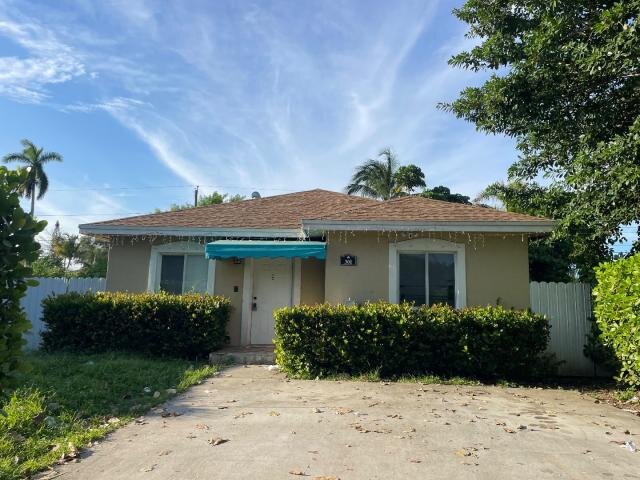
Our second Miami sale shows the other door. At 301 NW 82nd St, the seller had tenant trouble alongside code violations tied to maintenance, a fence needing repair, and a rear septic system that had begun failing. There, the seller asked the tenants to vacate, and they did; the house was vacant by closing and the purchase closed approximately 30 days later, with the repairs handled on our side afterward. That case study is here. Voluntary vacancy happens. It is not something a seller can compel on a paying tenant mid lease, and planning a sale as if it were guaranteed is how closings fall apart.
Who is in the house on closing day is its own question
Occupancy at signing and occupancy at closing are two different facts, and they drift apart on the most complicated sales: estates, family occupants, informal arrangements with no lease at all. In an Orange County estate evaluation on our desk, the occupant was on the seller’s side of the transaction, and the deal only worked with vacant at closing treated as a term to be protected, with a pre closing walkthrough to verify it and a holdback behind it, never as an assumption.
The plain version: whoever is living in the house, tenant, relative, or occupant with no paperwork, decide early which of them the sale requires to leave, get that in the written agreement, and verify it at the walkthrough. A sale can survive a tenant. It struggles to survive a surprise.
What to do if this is your rental
First, read your own lease like a buyer would: the end date, the rent, the renewal and termination language, and whether any of it was ever written down at all.
Second, build the file: the lease, a rent roll, twelve months of payment history, the deposit record, and any notices given or received. This file is the difference between documented income and a claim.
Third, decide which sale you are actually making: occupied, where the buyer steps in as landlord, or vacant, which requires a tenancy that has ended lawfully or tenants who agree to leave. Both are real sales with different buyer pools and different prices, and our Miami page and our Florida page show how we work through both in this market.
Fourth, if notices or an eviction are part of your plan, have a Florida landlord tenant attorney run them. The notice figures above are general law, and a defective notice restarts clocks you may not have.
Quick answers
Can I sell my house with tenants in it in Florida? Yes. Nothing in Florida law requires a rental house to be empty before it is sold. The buyer steps in as landlord on the existing lease terms.
Does the buyer have to honor my tenant’s lease? Yes. A fixed term lease continues to its end date under the new owner, unless the tenant agrees otherwise in writing or a legal ground for termination applies.
What happens to the security deposit when I sell? It transfers to the buyer at closing, with any earned interest and an accounting per tenant, under section 83.49(7). You are released from holding it once the transfer and written receipt are done.
Can I end a month to month tenancy so the house sells empty? Either side can end it with at least 30 days written notice before the end of a monthly period, under section 83.57.
Do I have to evict a tenant who stopped paying before I can sell? No. The house can be sold occupied, with the tenancy and its problems priced into the sale. Eviction, if it happens, runs through the county court under sections 83.56 and 83.59, for the seller before a sale or for the buyer after one.
Will tenants in the house lower my price? It depends on the lease. A paying tenant at market rent mid lease can raise an investor’s interest. Limited access, missing documents, below market rent, or unpaid rent lower it, because each is a cost or an unknown the buyer carries.
The bottom line
A Florida rental house does not have to be emptied to be sold. It has to be understood: the lease end date, the rent, the deposit, the documents, and who is actually living there. Get those five things on paper and the tenancy becomes part of the price, as it did in both Miami sales above.
This article is general information about how selling a tenant occupied house works in Florida, not legal advice. Notice periods, deposit handling, and eviction steps in your case depend on your lease and your county, so speak with a Florida landlord tenant attorney about your specific situation.
Questions about your own situation? Call us at (407) 214-0772. We are happy to talk through your options, with no pressure and no obligation.